Stinging insect colonies construct rapid shelter across Mecklenburg County between April and October, exploiting structural voids beneath horizontal fascia, cedar shakes, and brick weep screeds. In historic Dilworth…
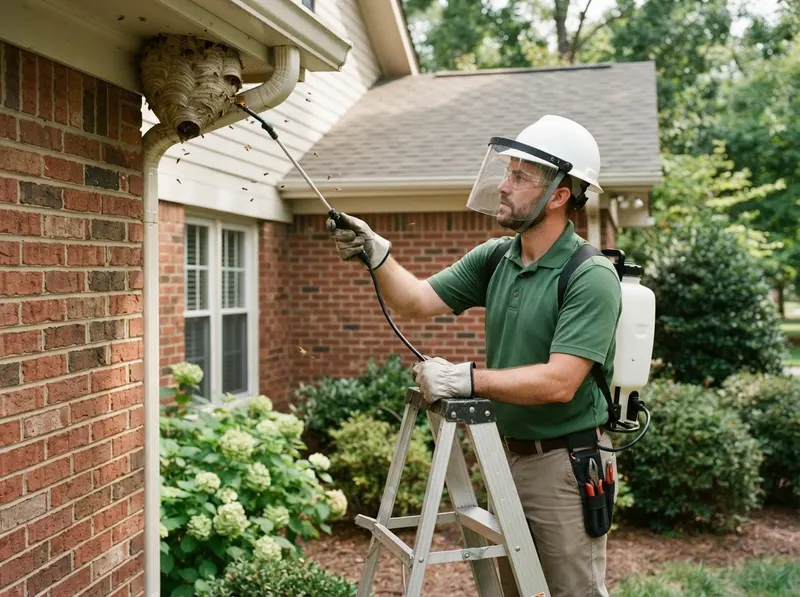
Stinging insect colonies construct rapid shelter across Mecklenburg County between April and October, exploiting structural voids beneath horizontal fascia, cedar shakes, and brick weep screeds. In historic Dilworth and Myers Park properties, paper wasps (Polistes dominula) frequently nest along open porch tongue-and-groove ceilings and high soffit returns. Further south in Ballantyne and Cotswold, subterranean yellowjackets (Vespula squamosa) routinely colonize vacated rodent burrows beneath pine straw mulch beds, creating severe puncture hazards for children playing in yards. Addressing these threats requires precise mechanical extraction rather than high-pressure recurring pesticide agreements, which often douse surrounding flower beds without destroying the hidden queen.
Decision guidance depends strictly on nest construction and proximity to human traffic. An exposed umbrella nest measuring under four inches beneath an Elizabeth garage gutter fits a single-step aerosol knockdown and mechanical detachment. In contrast, bald-faced hornets building large football-shaped paper structures inside mature crepe myrtles in NoDa or Plaza Midwood require pressurized micro-encapsulated dust injection directly into the downward-facing entry portal after dusk, followed by protective shroud containment to capture disoriented foragers. Attempting garden-hose drenching or hardware-store foggers frequently triggers defensive swarming, as North Carolina yellowjacket colonies house anywhere from 1,000 to 4,000 workers by late August. The operational trade-off is direct: single-nest targeted neutralization provides immediate, zero-residue relief for isolated patio threats, while structural void infiltrations behind South End brick veneers require an additional drilling-and-dusting protocol paired with copper mesh exclusion to stop seasonal re-entry.
Treatment execution follows three sequential steps designed to protect household members and companion animals. First, the technician pinpoints the primary flight path and verifies the species to distinguish predatory paper wasps from beneficial honeybees, which are referred out to local beekeepers in University City when feasible. Second, an applicator deploys an ultra-low-volume residual dust directly into the core brood combs, neutralizing adult stingers on contact without contaminating surrounding lawn areas or adjacent stormwater grates. Third, the technician scrapes away the paper combs, clears the attachment pedicle, and treats the anchoring substrate with an organic botanical repellent to dissolve the chemical pheromone markers that otherwise draw secondary queens back to the identical structural node next spring.
Every job gets a firm, written price after a free on-site visit.
Tell us about your stinging insect and wasp nest removal job in Charlotte and we'll send a clear, written quote, usually the same day.
 Willow Ridge Pest Control