Rodent abatement differs fundamentally from chemical baiting. Placing anticoagulant bait boxes across a yard merely thins visible populations temporarily while risking secondary poisoning to household dogs and…
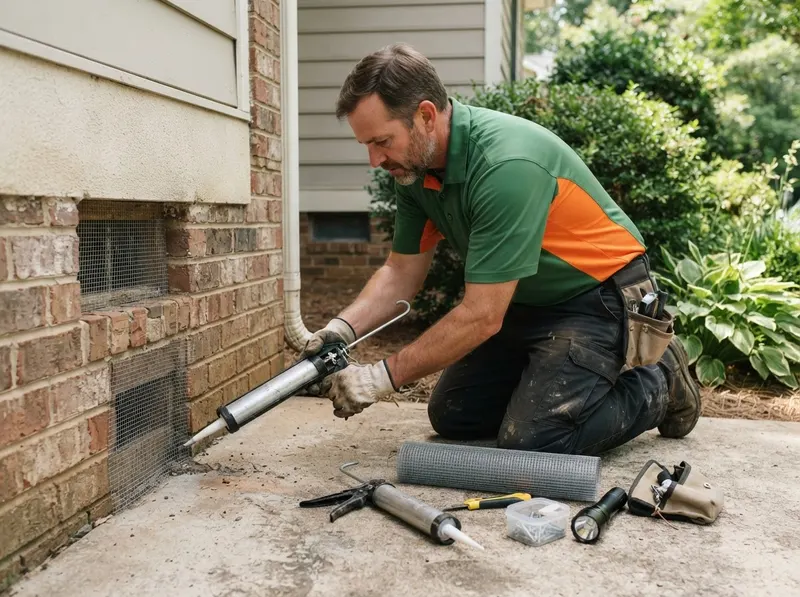
Rodent abatement differs fundamentally from chemical baiting. Placing anticoagulant bait boxes across a yard merely thins visible populations temporarily while risking secondary poisoning to household dogs and neighborhood birds of prey. Structural exclusion creates a permanent mechanical barrier using galvanized 19-gauge hardware cloth, metal flashing, and elastomeric silicone sealants that rodents cannot chew through.
If a home exhibits attic scuffling or gnawed drywall, physical exclusion eliminates the root vulnerability, whereas recurring poison programs require continuous monthly payments without ever closing the holes. In historic neighborhoods like Dilworth, Myers Park, and Plaza Midwood, brick veneer construction and aging crawl space vent frames frequently leave 1/2-inch gaps beneath floor joists that grant rodents direct access into wall cavities. Near the creek beds and tree canopies of Freedom Park and Cotswold, roof rats travel through mature oaks to target uncapped ridge vents and fascia junctions.
In newer slab-on-grade builds across Ballantyne and University City, builders often leave oversized gaps around heat pump line sets and garage door corner gaskets. Addressing these structural entry points restores clean living spaces, eliminates droppings, and protects electrical wiring from fire hazards without filling bedrooms with airborne synthetic chemicals. The initial scope requires a comprehensive inspection of all foundation corners, attic soffits, and crawl space accesses, followed by custom-fitted metal reinforcement and tamper-resistant interior removal systems.
Every job gets a firm, written price after a free on-site visit.
Tell us about your rodent exclusion and abatement job in Charlotte and we'll send a clear, written quote, usually the same day.
 Willow Ridge Pest Control